How It Works
"Authorization shouldn't be rocket science. Yet here we are, drowning in complex solutions that make simple permission checks feel like solving quantum physics equations. Enter Kilpi - the TypeScript authorization framework that finally gets it right."
What is Kilpi? The Modern Authorization Framework for TypeScript
The Authorization Headache We All Know
Let's be honest - most authorization solutions feel like they were designed to make developers miserable. You either get:
- 🏗️ Over-engineered behemoths that require a PhD to configure
- 🧩 Patchwork solutions that crumble under real-world complexity
- 🔐 Security nightmares waiting to happen
That's why Kilpi caught my attention. It's not just another auth library - it's the result of someone (Jussi Nevavuori) solving the same authorization problems repeatedly for different clients and finally creating the solution we all needed.
Kilpi in a Nutshell
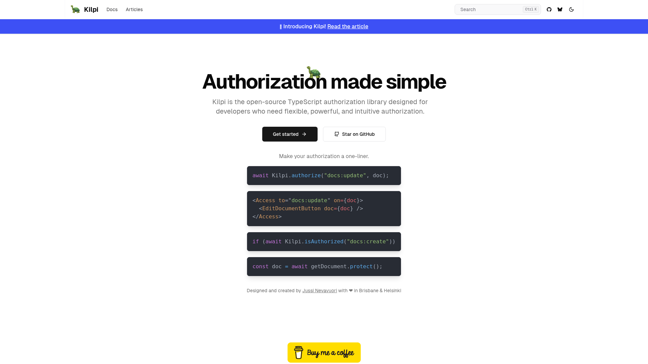
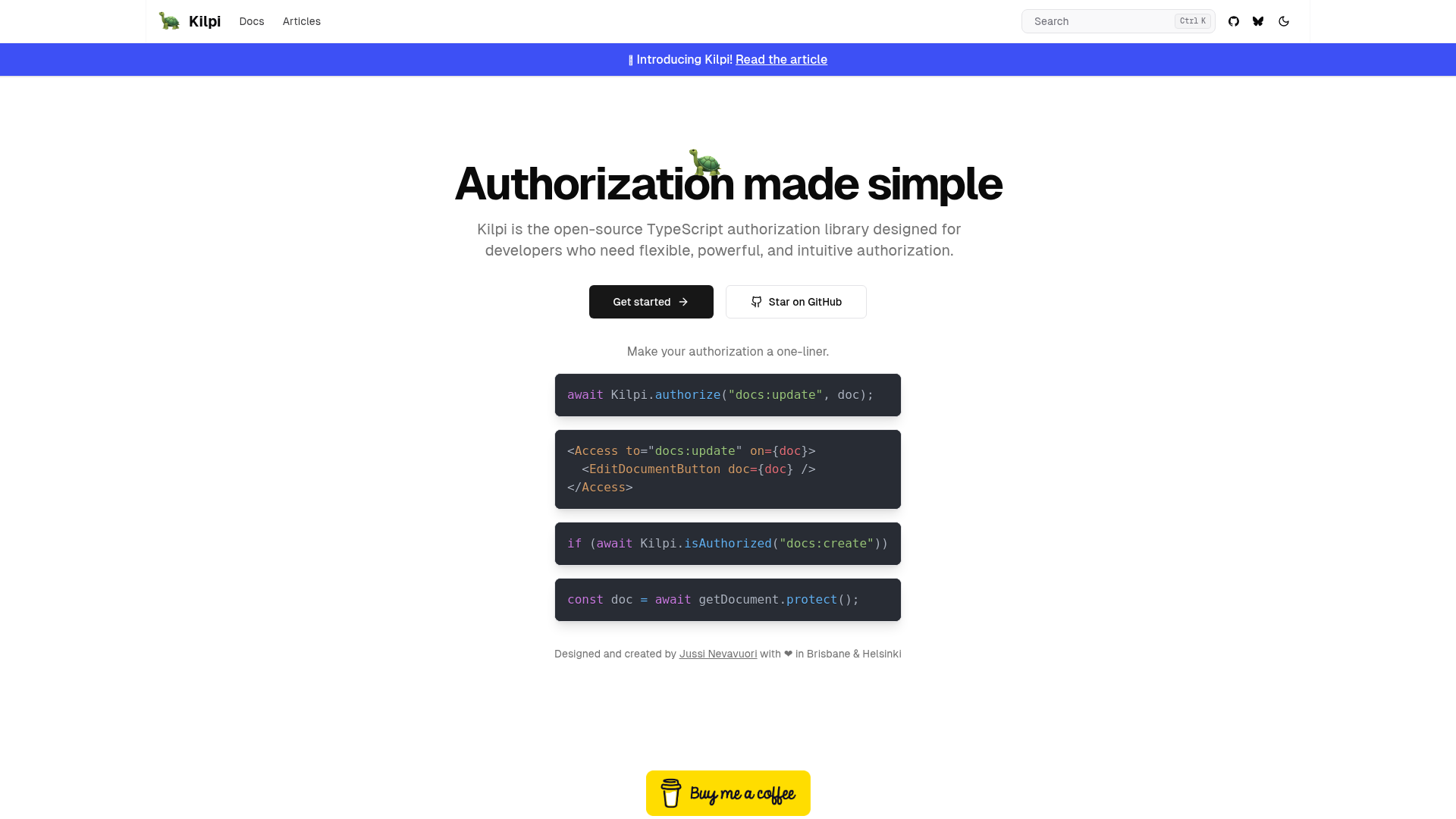
Kilpi is an open-source TypeScript authorization framework that turns this:
```typescript // The old way if (user.role === 'admin' && resource.ownerId === user.id && resource.status !== 'archived') { // Maybe let them do something? } ```
Into this clean one-liner:
```typescript // The Kilpi way await authorize(user).can('edit', resource); ```
Why This Matters
- Type Safety First: Every authorization check is compile-time verified
- Real-World Ready: Battle-tested in production environments
- Developer Happiness: API so intuitive it almost feels cheating
The Killer Features That Set Kilpi Apart
Framework Agnostic by Design
Unlike solutions tied to specific frameworks, Kilpi plays nice with:
- Next.js
- Express
- NestJS
- And anything else in your stack
```mermaid graph LR A[Your App] --> B[Kilpi] B --> C[NextAuth/Auth0/Clerk] B --> D[Your Database] ```
Authorization Models Galore
Kilpi doesn't force you into one paradigm:
- 🔵 RBAC (Role-Based Access Control)
- 🟢 ABAC (Attribute-Based Access Control)
- 🟣 ReBAC (Relationship-Based Access Control)
- Or your custom hybrid approach
Server-First Security
In an era of client-side everything, Kilpi keeps authorization where it belongs - on the server. No more "hoping" your client-side checks match the backend.
Policies as Proper Code
Forget JSON configuration hell. Your authorization rules live in TypeScript:
```typescript // Define once, use everywhere const postPolicy = { create: (user) => user.isVerified, edit: (user, post) => user.id === post.authorId || user.role === 'moderator' }; ```
Real-World Use Cases Where Kilpi Shines
1. SaaS Applications
- Handle multi-tenant permissions cleanly
- Easily manage team-based access controls
2. Content Management Systems
- Flexible publishing workflows
- Granular content access rules
3. Internal Tools
- Rapidly adapt to changing org structures
- Maintain audit trails through code
The Developer Experience Difference
What makes Kilpi stand out isn't just what it does, but how it feels to use:
- Autocomplete That Actually Helps: The TypeScript integration is so good it feels like the framework reads your mind
- Sensible Defaults: Comes configured for security out of the box
- No Surprise Errors: Clear, actionable messages when something's misconfigured
Getting Started With Kilpi
Installation is straightforward:
```bash npm install @kilpi/auth
or
yarn add @kilpi/auth ```
Basic setup example:
```typescript import { createKilpi } from '@kilpi/auth';
const kilpi = createKilpi({ policies: { post: postPolicy, user: userPolicy } });
// Then anywhere in your app: await kilpi.authorize(currentUser).can('edit', blogPost); ```
When You Might Need Something Else
While Kilpi is incredibly flexible, it's not always the perfect fit:
- If you need built-in authentication (Kilpi focuses on authorization)
- For extremely simple apps where basic role checks suffice
- When working with non-TypeScript codebases
The Future of Authorization?
What excites me most about Kilpi is how it represents a shift in how we think about authorization:
- From configuration to code
- From rigid to flexible
- From afterthought to first-class citizen
As Jussi mentioned in his announcement post, this is just the beginning. With its plugin system and active community, Kilpi is poised to become the go-to solution for TypeScript authorization.
Ready to Try Kilpi?
If you're tired of authorization being the worst part of your codebase:
- 🌟 Star the Kilpi GitHub repo
- 📚 Dive into the documentation
- 🚀 Implement your first policy today
Because life's too short for bad authorization code.
Features
- Framework agnostic: Works with any existing tech stack.
- Server-first authorization: Runs all authorizations on the server for security.
- Any auth provider: Supports all auth providers via the Subject API.
- Policies as code: Implement policies in type-safe TypeScript.
- Async policies: Fetch data from databases or APIs during authorization.
- All authorization models: Supports RBAC, ABAC, ReBAC, and more.
- Protected queries: Wrap queries to ensure secure data access.
- Client-side authorization: Fetch authorization decisions with deduping and caching.
- Plugin API & Library: Extend Kilpi with custom or ready-made plugins.
- Developer-friendly API: Clean, simple, and intuitive API design.





Comments