


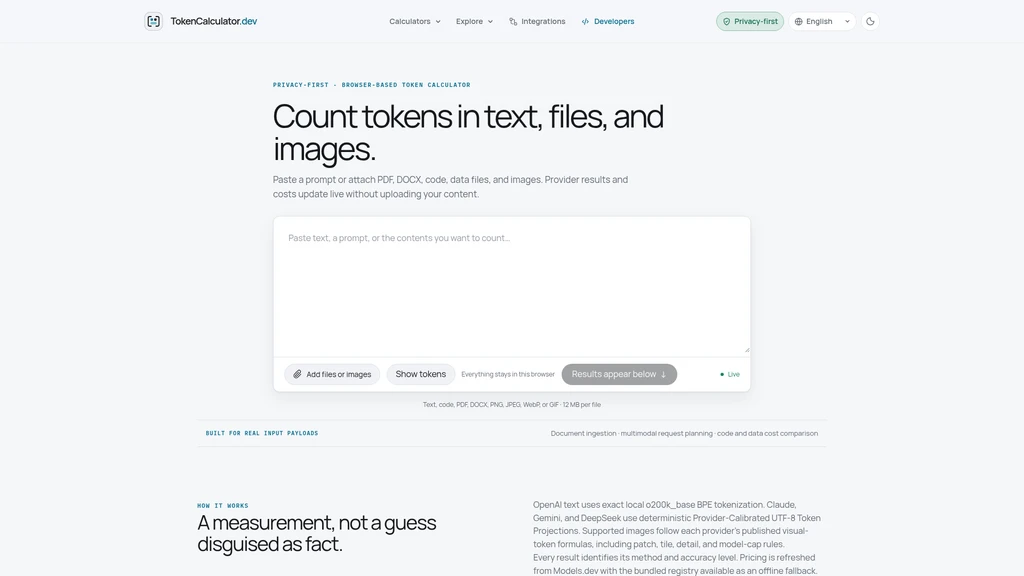
Token Calculator - Privacy-first browser-based token calculator to count tokens in text, files, and images for all major LLM providers
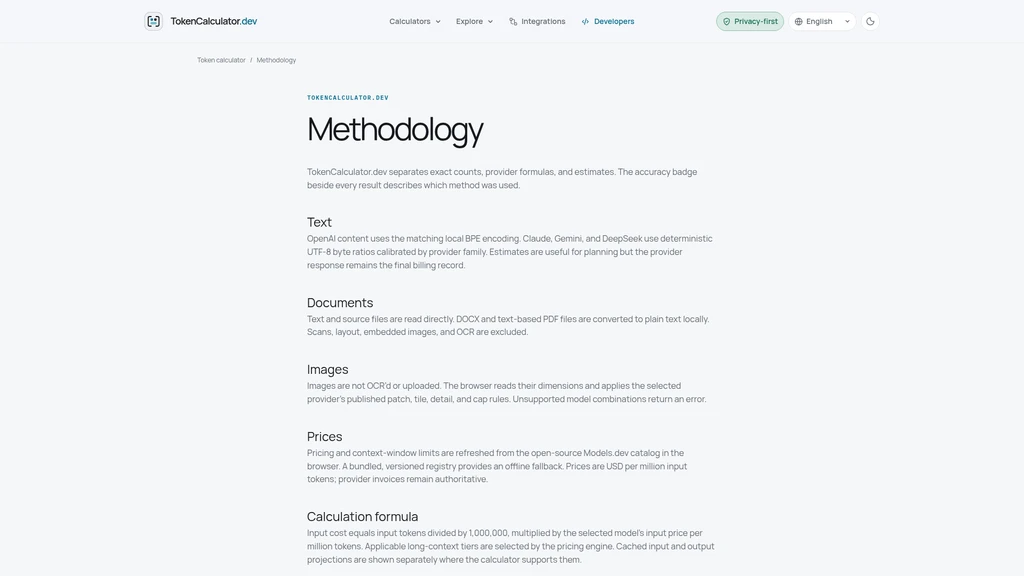
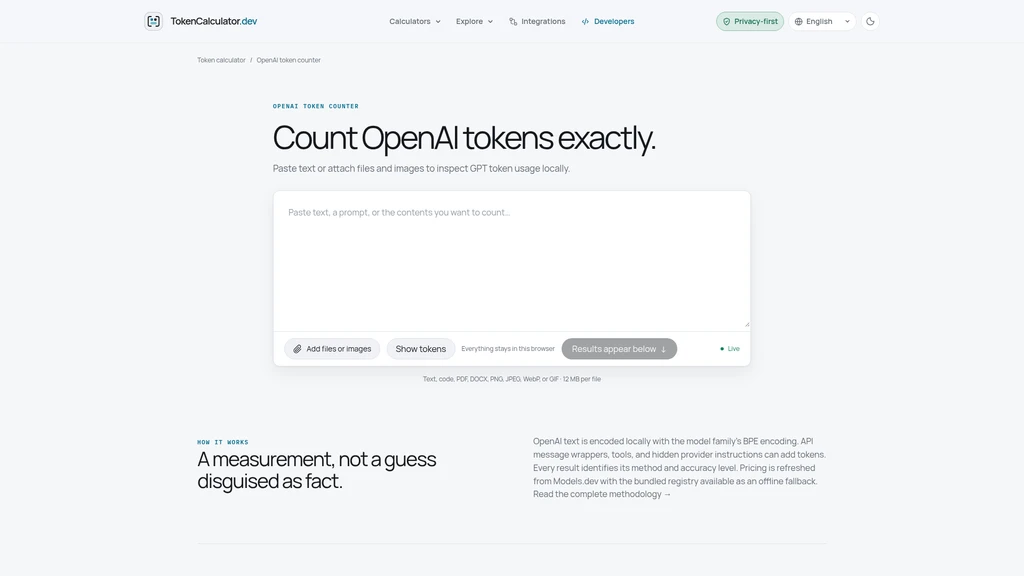
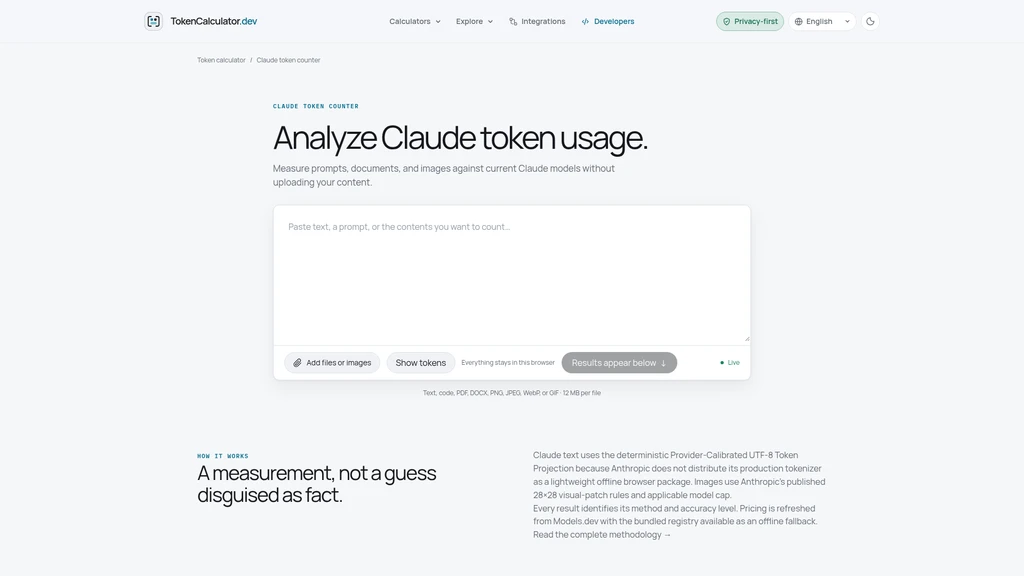
Launched on Sep 22, 2026TokenCalculator.dev is a browser-hosted, privacy-first token counting tool that runs all calculations locally on your device, no user content is uploaded to external servers. It supports text prompts, code files, PDF, DOCX documents, and common image formats, returning live token counts and estimated API costs across 35+ models from 9 popular LLM providers. It is built for AI developers, LLM workflow planners, and teams comparing pricing across different generative AI services to estimate workload costs accurately before making API calls.
Related Content

Copy.ai Review 2026: AI Copywriting Made Easy
Our honest Copy.ai review for 2026. We test Content Agents, AI Workflows, pricing ($29-$249/mo), and compare it to Jasper and Writesonic. Find out if it's worth it for your marketing team.

Rytr Review 2026: Is This Budget AI Writer Worth It?
Our hands-on Rytr review for 2026. We test features, pricing, content quality, and compare it to Jasper & ChatGPT. Find out if Rytr is the best budget AI writing tool.

Word Changer - Free AI tool to rewrite and improve your writing instantly
Writing always using repetitive words or need to avoid plagiarism? Word Changer is a free AI writing assistant that instantly rewrites any text with richer vocabulary and appropriate tone. Get multiple versions with one click, adjust formality level, check readability - all for free!

Unite - AI-powered platform for romantic fantasies and dream couple moments
Explore romantic fantasies and create special moments for your dream couple. This AI-powered platform lets you generate personalized romantic content and experience exclusive AI-created romantic experiences.
Comments