


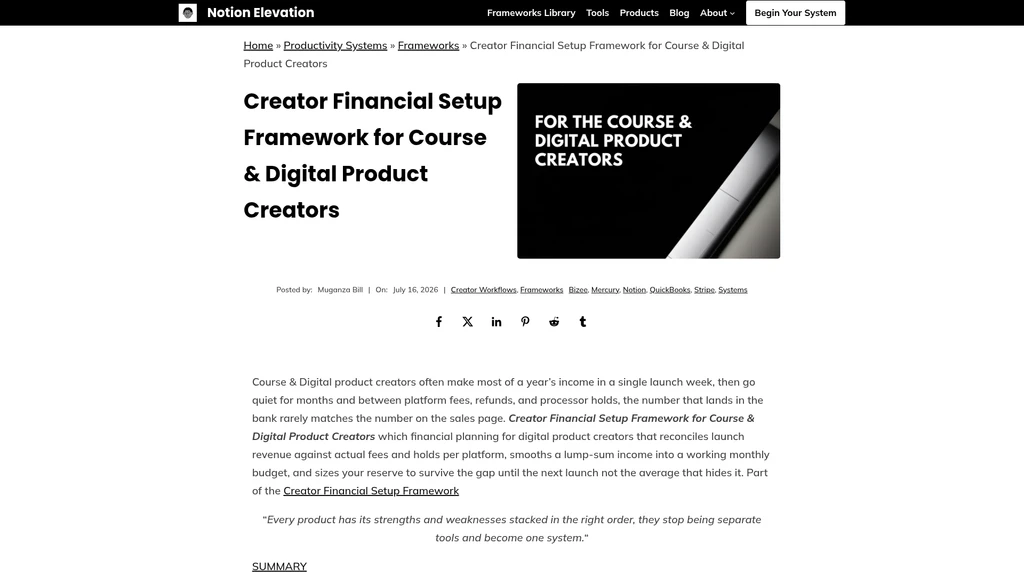
Creator Financial Setup Framework for Course & Digital Product Creators - Structured financial system for launch-cycle income of course and digital product creators
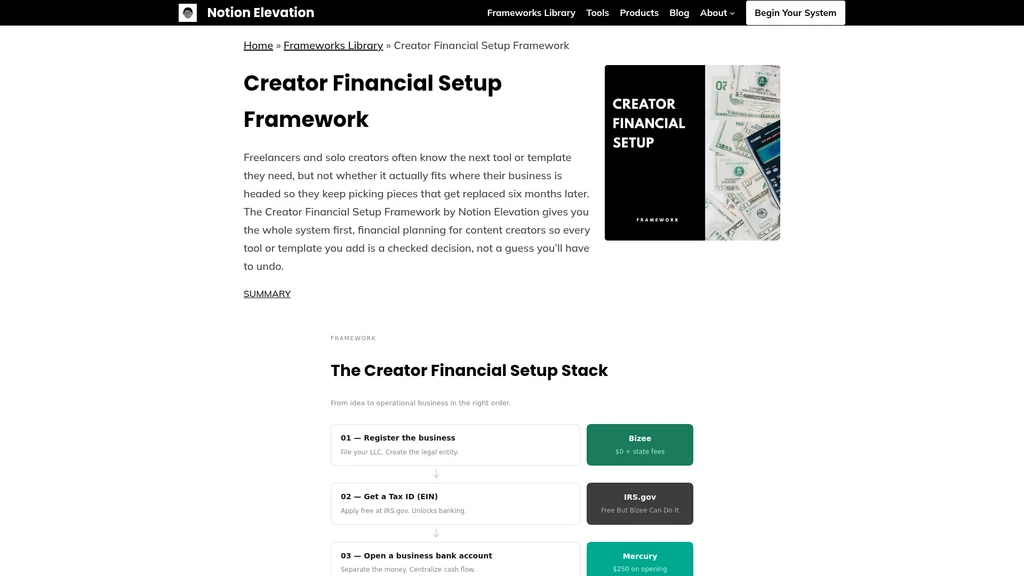
Launched on Sep 24, 2026This is a step-by-step financial planning system built specifically for course and digital product creators who earn most of their annual income in short launch periods, rather than steady monthly revenue. It helps reconcile actual launch earnings after platform fees, refunds and processor holds, split lump-sum income into a sustainable monthly budget, and size cash reserves to cover the full gap between consecutive launches. The framework guides users through the correct sequence of business registration, business banking setup, payment processing, and bookkeeping workflows without forcing unnecessary expensive tools.
Related Content

Copy.ai Review 2026: AI Copywriting Made Easy
Our honest Copy.ai review for 2026. We test Content Agents, AI Workflows, pricing ($29-$249/mo), and compare it to Jasper and Writesonic. Find out if it's worth it for your marketing team.

Rytr Review 2026: Is This Budget AI Writer Worth It?
Our hands-on Rytr review for 2026. We test features, pricing, content quality, and compare it to Jasper & ChatGPT. Find out if Rytr is the best budget AI writing tool.

Word Changer - Free AI tool to rewrite and improve your writing instantly
Writing always using repetitive words or need to avoid plagiarism? Word Changer is a free AI writing assistant that instantly rewrites any text with richer vocabulary and appropriate tone. Get multiple versions with one click, adjust formality level, check readability - all for free!

Unite - AI-powered platform for romantic fantasies and dream couple moments
Explore romantic fantasies and create special moments for your dream couple. This AI-powered platform lets you generate personalized romantic content and experience exclusive AI-created romantic experiences.
Comments