


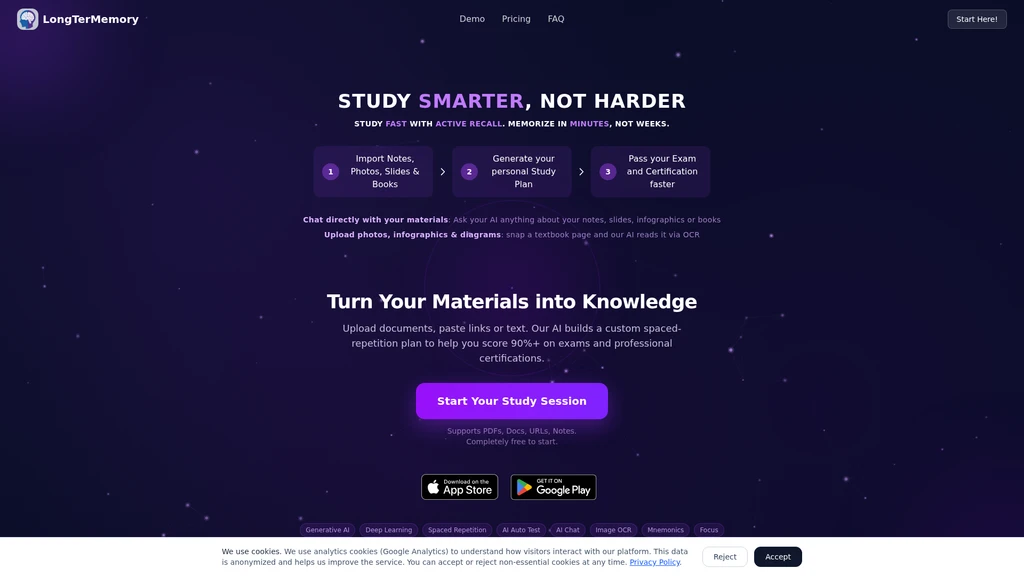
LongTerMemory - Study SMARTER, Not Harder. Memorize in minutes, not weeks.
Launched on Sep 21, 2026LongTerMemory is an AI-powered educational platform that turns your notes, slides, textbooks and uploaded study materials into personalized spaced-repetition study plans for faster exam and certification preparation. It combines OCR support for photo uploads, AI chat with your content, and evidence-based active recall techniques to help users reach 90%+ retention rates with less total study time. The tool is built for students, medical professionals, IT certification candidates, law students, and anyone preparing for high-stakes tests, with a completely free onboarding to get started.
Related Content

Copy.ai Review 2026: AI Copywriting Made Easy
Our honest Copy.ai review for 2026. We test Content Agents, AI Workflows, pricing ($29-$249/mo), and compare it to Jasper and Writesonic. Find out if it's worth it for your marketing team.

Rytr Review 2026: Is This Budget AI Writer Worth It?
Our hands-on Rytr review for 2026. We test features, pricing, content quality, and compare it to Jasper & ChatGPT. Find out if Rytr is the best budget AI writing tool.

Word Changer - Free AI tool to rewrite and improve your writing instantly
Writing always using repetitive words or need to avoid plagiarism? Word Changer is a free AI writing assistant that instantly rewrites any text with richer vocabulary and appropriate tone. Get multiple versions with one click, adjust formality level, check readability - all for free!

Unite - AI-powered platform for romantic fantasies and dream couple moments
Explore romantic fantasies and create special moments for your dream couple. This AI-powered platform lets you generate personalized romantic content and experience exclusive AI-created romantic experiences.
Comments