


LemonadeJS - Lightweight reactive JavaScript library
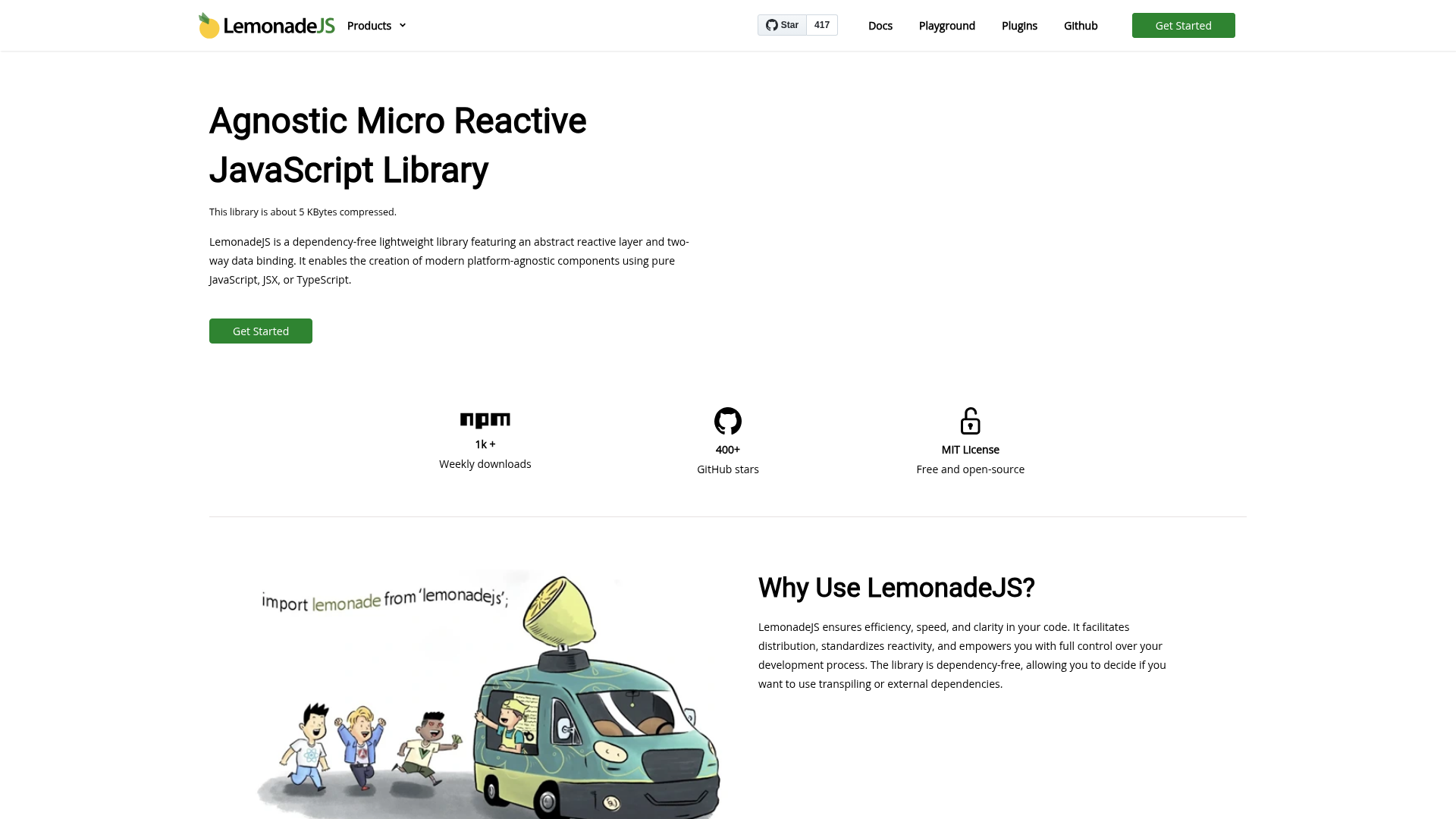
Launched on May 3, 2025LemonadeJS is a dependency-free lightweight library featuring an abstract reactive layer and two-way data binding. It enables the creation of modern platform-agnostic components using pure JavaScript, JSX, or TypeScript. The library is just 5 KBytes compressed and integrates with popular front-end frameworks like VUE, React, and Angular. LemonadeJS ensures efficiency, speed, and clarity in your code while providing flexibility without sacrificing performance. It supports a pub/sub pattern for seamless synchronization and reactivity across applications. The library is free and open-source under the MIT License.


Related Content

Copy.ai Review 2026: AI Copywriting Made Easy
Our honest Copy.ai review for 2026. We test Content Agents, AI Workflows, pricing ($29-$249/mo), and compare it to Jasper and Writesonic. Find out if it's worth it for your marketing team.

Rytr Review 2026: Is This Budget AI Writer Worth It?
Our hands-on Rytr review for 2026. We test features, pricing, content quality, and compare it to Jasper & ChatGPT. Find out if Rytr is the best budget AI writing tool.

Word Changer - Free AI tool to rewrite and improve your writing instantly
Writing always using repetitive words or need to avoid plagiarism? Word Changer is a free AI writing assistant that instantly rewrites any text with richer vocabulary and appropriate tone. Get multiple versions with one click, adjust formality level, check readability - all for free!

Unite - AI-powered platform for romantic fantasies and dream couple moments
Explore romantic fantasies and create special moments for your dream couple. This AI-powered platform lets you generate personalized romantic content and experience exclusive AI-created romantic experiences.
Comments