Core Offerings
Finn Garden publishes structured, hands-on content split across three primary sections, no paid registration required to access the public guides. All content is written from direct testing of tools and workflows, with no generic third-party reposts.
Project Profiles
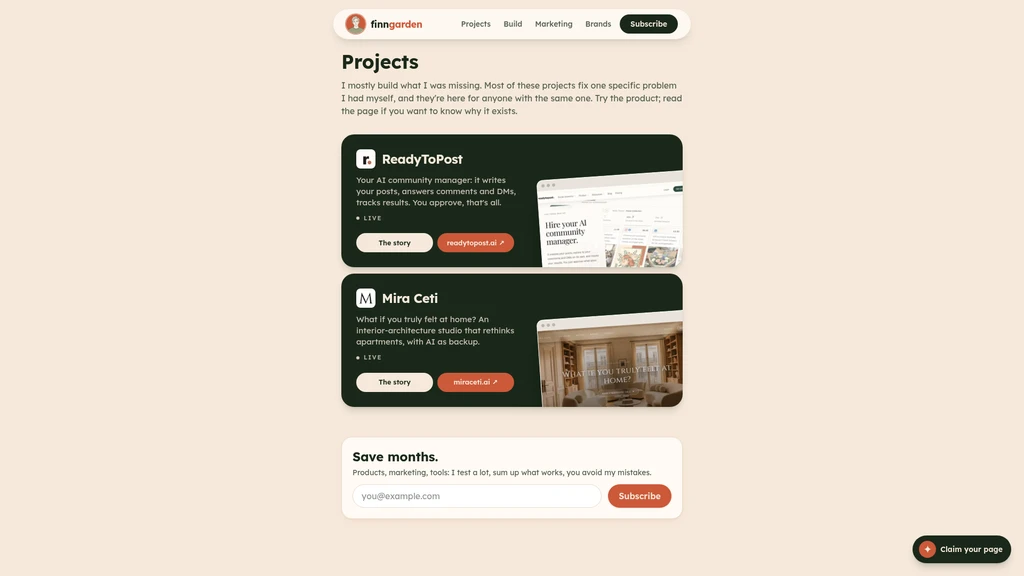
The site features two in-progress public projects that the author builds and maintains:
An AI community manager tool that creates social posts, responds to incoming comments and direct messages, and tracks performance results. Users retain full approval control before any content goes live.
An AI-powered interior architecture studio that helps redesign residential apartments, using AI to support design work rather than replace human creative direction.
Build Articles
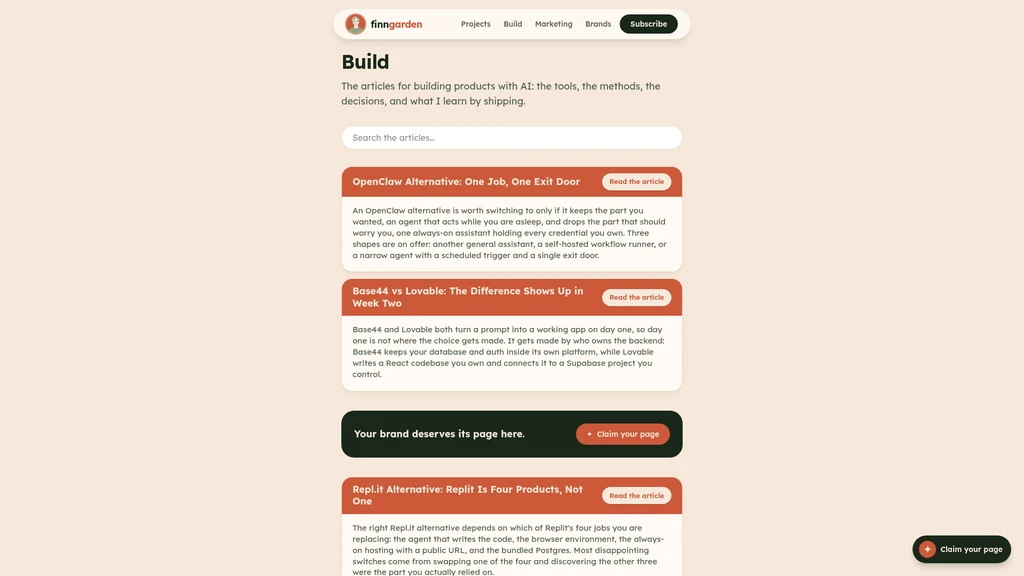
The build section covers practical, side-by-side comparisons of popular development tools and agent setups, with concrete differences that most generic review sites omit:
It breaks down three distinct alternatives to OpenClaw, highlighting the tradeoff of moving away from an always-on central assistant that holds all user credentials. The three options covered are a general purpose assistant, a self-hosted workflow runner, and a narrow purpose scheduled agent with a single defined exit path.
It compares Base44 and Lovable, two tools that turn a natural language prompt into a working production app on day one. The key difference outlined is ownership of the backend: Base44 hosts your database and authentication on its own platform, while Lovable generates a complete React codebase you own and connects it directly to a Supabase instance you control.
It maps exactly what parts of Repl.it each popular alternative replaces, splitting the platform into four distinct components: code-writing agent, in-browser code editor environment, always-on public URL hosting, and bundled Postgres database. The guide explains that most failed Repl.it replacements happen when a user only swaps one of these four components and later finds they relied heavily on the other three.
Marketing Articles
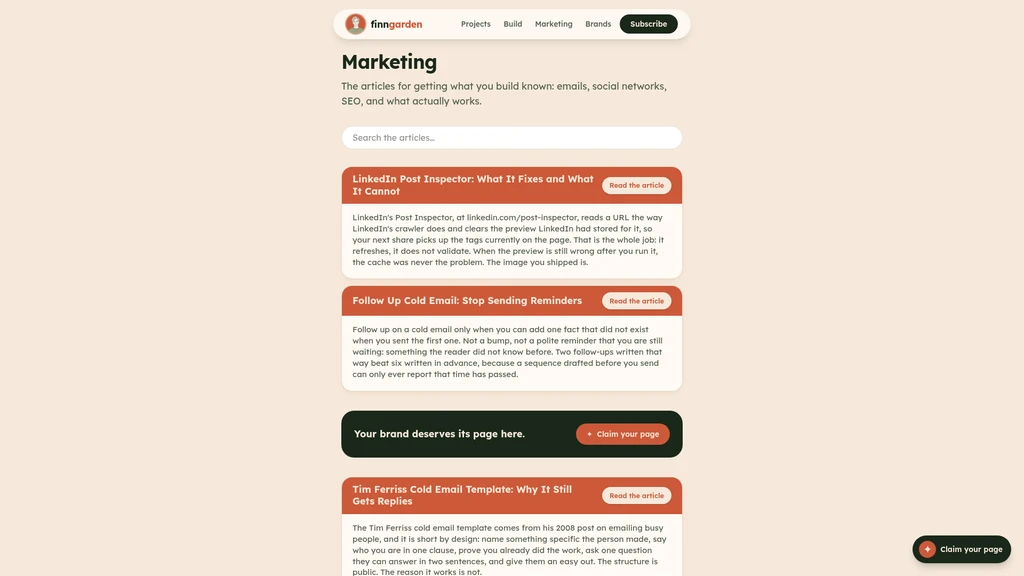
The marketing section publishes actionable, field-tested tactics that work for B2B and indie product promotion:
It explains the exact function of LinkedIn's official Post Inspector tool, clarifying that it only refreshes LinkedIn's stored preview cache, it does not perform full validation of open graph tags. It also notes that if the preview still renders incorrectly after you run the inspector, the issue is almost always the source image on your page, not the cached version on LinkedIn's side.
It lays out a rule for effective cold email follow-ups: only send a follow-up when you can add a new fact that did not exist when you sent the original message. Reminders or generic nudges underperform sequences that include new, specific information the recipient has not seen before.
It breaks down the structure of the Tim Ferriss cold email template first published in 2008, noting that while the structural rules are publicly known, the actual effectiveness comes from execution that follows the exact short, focused format.
Backed Brands List
The public brands section lists tools the author personally backs, with short, precise descriptions of what each product does:
AgentMail: Email infrastructure built specifically for AI agents, that lets users create inboxes via API, send and receive messages programmatically, and let connected agents act on structured incoming messages.
Mailivery: Automated email warm-up service that runs real, natural conversations to build a sending domain's reputation before you launch full marketing campaigns.
PostHog: Open source product analytics platform that combines event tracking, session replay, feature flags, A/B testing, and surveys in one interface, with a permanently free tier for small projects.






Comments